
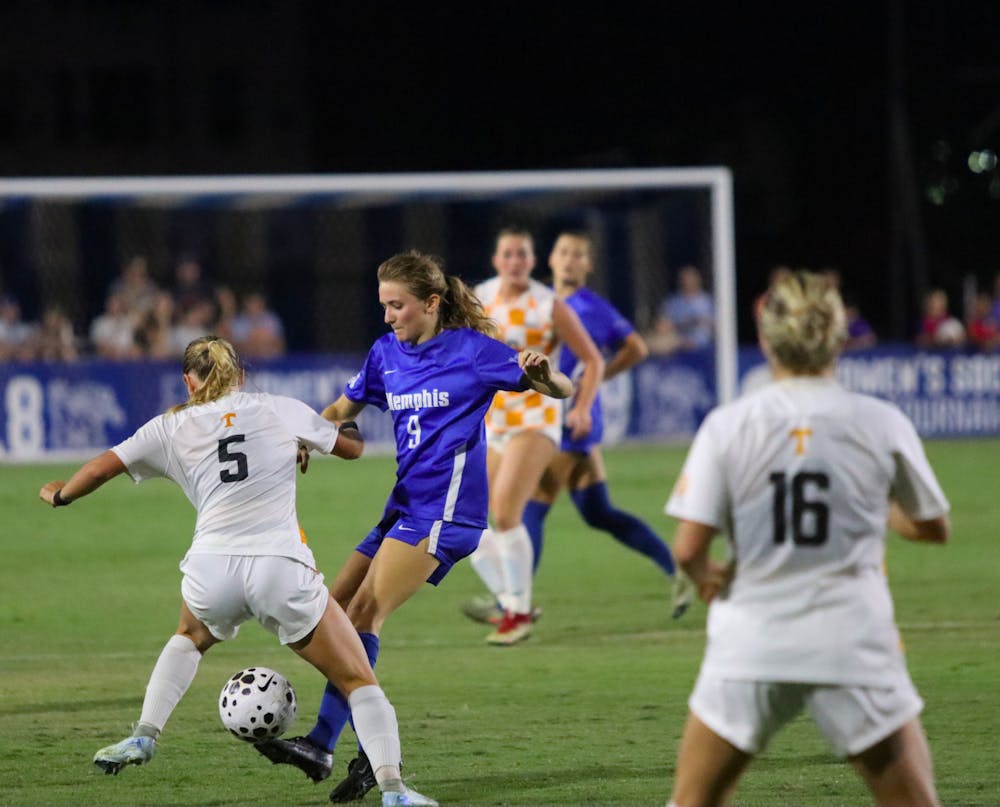
Women’s sports at the University of Memphis will participate in the plans to share revenue with its student athletes, even though the bulk of it will go to men’s basketball and football, according to Altius NIL Athlete Marketing Manager Cameron Cole.
On June 6th, a settlement was reached between the House of Representatives and the NCAA, thanks to a bill that originated from a Circuit Court in Northern California, which allowed athletic programs a salary cap of $20.5 million.
Cole would not disclose how much of that money will be provided to women’s athletes as compared to the men at the University of Memphis. Nationally, the figure is less than 5 %, as reported by the website NIL.NCAA.com.
“Even though our women’s sports do not receive as much attention as football and men’s basketball, thanks to this House settlement, it’s nice to know that they are not being forgotten,” Cole said.
NIL, which stands for Name, Image, and Likeness, is a legal process that enables college athletes to receive compensation for their performances. For decades, this has been an ongoing debate about whether athletes should be paid, given the millions of dollars in revenue they generate for their universities.
On July 1, 2021, the U.S. Congress and the NCAA reached an agreement that athletes should be paid for their efforts. The only problem was that sports such as football and men’s basketball, which drew the most fans to the games, had massive TV contracts that attracted millions of viewers to their universities.
According to Business of College Sports.com, the College Football Playoff games that air on ABC and ESPN networks generate over $5 billion in TV revenue. The Men’s basketball tournament, also known as March Madness, which airs on CBS and the Turner networks, averages $1 billion a year in TV revenue. Women’s sports that air their championships on ESPN networks only generate 115 million dollars in TV revenue. With this low amount of TV revenue compared to football and men’s basketball, it seemed that the future of women’s sports in the NCAA was in question.
“NIL is great for our players because the system should be a free market for all based on their success no matter which conference the team is in,” Memphis assistant women’s soccer coach Johnny Walker said.
At the University of Memphis, women's athletics are not being left behind, and the success of the women's soccer team shows that.
“The University of Memphis Athletic Director Ed Scott has made sure that our women’s soccer team has been competitive in the NIL era,” Lawrence Dockery, host of the 901 Soccer Podcast, said.
The UofM women's soccer team is the top program in the American Conference, having appeared in the NCAA tournament five of the last six years.
“Would our players receive more money if we were in a conference like the SEC or the BIG 12? Absolutely,” Walker said. “However, the desire to beat these schools and for our women’s team to prove they are among the best of the best is worth the small amount of money they get.”
Cole said that fans can do their part as well to support the women athletes at the U of M.
“Show up, not just to rivalry games against Tennessee that set record attendance, show up to every game, and not just soccer, but softball, volleyball every women’s sport,” Cole said. “These athletes are your fellow students, and showing up means you care about them. Also, if you can donate some money to the NIL fund, even just a few dollars, it helps us a long way.”
On Sept. 4, the Memphis women’s soccer team welcomed its in-state rivals, the Lady Vols of the University of Tennessee. A record crowd of 2,213 attended the game, and it was also streamed on ESPN Plus.
Even though the University of Memphis is not in a Power Four conference (SEC, BIG 10, BIG 12 or ACC) it does have one advantage: One of the largest companies in the world in FEDEX is donating $5 million per the next five years in help of NIL to try and show the country that the university is worthy of being in one of the Power Four conferences.
“This was part of Fred Smith’s vision for the University of Memphis Athletic Department,” Cole said. “He did what he felt was beneficial to him and the city that he loved. The Smith family has always done great things for the University of Memphis, and we hope that this will help our NIL fund for every athlete for years to come.”


