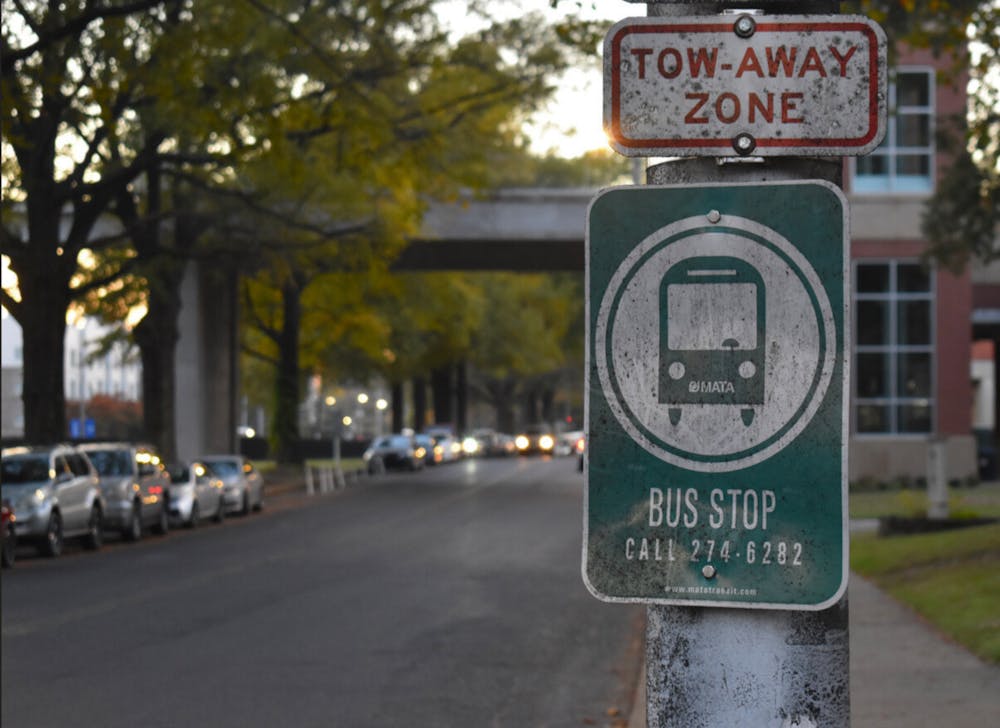
The Memphis Area Transit Authority (MATA) will implement a 90-day free fare pilot program in an attempt to increase ridership. But will it be effective?
The pilot, beginning Nov. 16, is a joint effort between MATA and the Memphis City Council. While the agency hopes the program will encourage more Memphians to take public transit, some say it fails to address the root of the problem.
“Of all the metrics that were included in (a rider survey), it shows that bus riders are mostly satisfied with how much it costs to ride the bus (72%) and that only 4% of customers said that 'amount you pay to ride the bus’ is most important to them,” said Jackson McNeil, a former MATA board member and University of Memphis alumnus. “There are certainly good arguments to be made for free fare programs, but it seems pretty clear that this isn't a priority for current bus riders."
MATA’s fares, currently $1 per ride or $2 for a day pass, are among the lowest in the country. For many riders, the biggest complaint is not about cost, it is reliability.
The system’s infrequent service and frequent delays have discouraged many from relying on the bus.
“If I were desperate, if I really had to go somewhere important, I would,” said Luis Chabira, a UofM faculty member. “But nine times out of ten, I’d use my own car or ask a friend to take me there.”
At the UofM main campus, three different routes run buses once every 30 minutes to sometimes over an hour, a challenge for both students and faculty, especially those who must transfer between routes.
Operating times are also an issue; while the bus runs until 11 p.m. on weekdays, Saturday routes operate hourly between 8 a.m. and 8 p.m., and Sunday service ends at 5 p.m.
“It should be free with how this service is,” said one frustrated rider, who declined to be named. She said she had been waiting for a very delayed Poplar bus — one that never arrived.
The rider was waiting at the UofM stop around 4:30 p.m. While the old schedule listed that time as an arrival, the updated schedule posted in August removed it.
Other passengers voiced concerns that the fare-free program could lead to overcrowded buses without enough vehicles to accommodate new riders.
“It will encourage me to be careful about which (routes) I pick,” said Roger Schultz, a senior at UofM. “I got on the (Poplar) and we got to the point where we had people sitting in the center aisle and others standing because they don't have (buses) going enough.”
The Poplar bus is the busiest bus route in Memphis. It runs from Downtown to Germantown along Poplar Ave. and the north side of the UofM campus.
Ridership for MATA has been in a steep decline since the COVID-19 pandemic. While most transit agencies across the U.S. have rebounded to near pre-pandemic ridership, MATA's numbers have only worsened.
An aging fleet, mismanagement of funds, and reduced routes have all contributed to the drop. In 2019, MATA had an annual ridership of 5.6 million; by 2024, that number had decreased to 2.8 million.
Although fare costs are not a major concern for most riders, some welcome the temporary financial relief.
“I work a nine-to-five, and it’s sometimes hard to be able to pay for transportation every day,” said Francesca Wilson, a UofM faculty member.
Wilson was waiting to take the Madison bus, which runs along the south side of the main campus, to Highland Street to transfer buses. She said she had to wait about an hour for her transfer bus to arrive.
While the fare pilot offers riders some financial relief and could attract some new riders, MATA still has a reliability issue that needs to be addressed.
Mel Eleftheriou can be contacted at mlfthrou@memphis.edu.