The University of Memphis currently lacks a reliable transit service, but a new campus organization, the Campus Transit Alliance, is working to change that.
The organization aims to create a partnership between the university and the Memphis Area Transit Authority (MATA). The proposal calls for the university to offer transit passes as an alternative to the parking pass to students. The revenue from those passes would be used to increase MATA service at the UofM in return.
“All students pay fees, and part of that is the [university] sends you a parking pass. You get a parking pass even if you’re a transit user, but you don’t get any benefit,” said Dr. Susan Neely-Barnes, a UofM professor and founder of the Campus Transit Alliance. “Another thing we are advocating for is transit parity, so students can choose whether they want a parking pass or a transit pass.”
To identify where service needs are greatest, the organization is also seeking approval to conduct a survey for students and faculty to collect travel data.
“Part of the data collection we want to do is identifying current travel patterns,” said Andrew Guthrie, a Campus Transit Alliance member. “We want to know what destinations students living on campus would like to reach but can’t, and where online students who live in Memphis are located who would otherwise attend classes in person.”
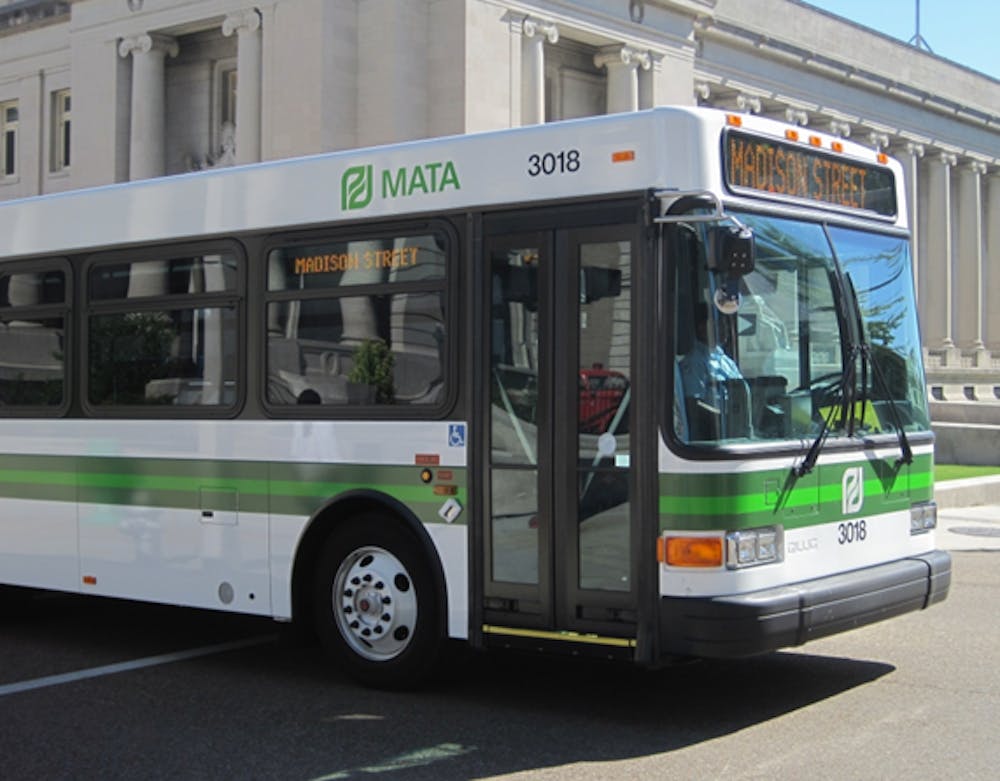
Although the University of Memphis is currently served by three MATA bus routes, they all run at low frequencies of every 30 minutes to an hour. These schedules make commuting to campus challenging for both students and staff.
“Because we have a low frequency system in that context, transfers between routes are difficult, and they're made more difficult by the fact that MATA doesn't have either enough buses or enough drivers to even run all of the service they currently schedule,” said Guthrie.
For many, these challenges leave cars as the only option for getting to campus. But relying on cars is costly, with expenses including gas, insurance, maintenance, and other unexpected issues.
The organization also hopes to have outreach to teach people how to use transit and combat the stigma around taking public transit.
The Campus Transit Alliance currently has about 45 members. While the exact number of UofM community members who ride MATA daily is unknown, the group believes it is significant.
Still, their vision faces an uphill battle. MATA is currently in a financial crisis and struggling with a bus shortage, which prevents the system from keeping up with its posted schedules. The alliance acknowledges these challenges but emphasizes that their proposal is a long-term goal to build a more accessible campus.
Mel Eleftheriou can be contacted at mlfthrou@memphis.edu