
A 1968 Memphis sanitation workers’ strike by some black sanitation workers will be remembered Feb. 7 at “Where Do I Stand: Lessons Today from the ’68 Sanitation Strike,” an event hosted by the University of Memphis’ student chapter of the National Association of Black Journalists and the Office of Multicultural Affairs.
The event will take place in the University Center River Room and will include a panel discussion with the Rev. James L. Netters and Fred Davis, the first two black city councilmen in office when Martin Luther King, Jr. came to Memphis, and history major RaSean Jenkins. Refreshments will be served beginning at 5:30 p.m., and the program will start at 6 p.m.
Jenkins, 23, said he will be sharing information about the “hardships and disadvantages African-American men and women face going to college and living in Memphis today.”
Jenkins said he believes some Memphians are unaware of the strike because any media coverage was largely overshadowed by King’s assassination.
Brian Kwoba, U of M assistant professor of history, said some Memphians may feel a certain degree of shame about King’s assassination, which may deter them from sharing knowledge about the events of the ‘60s.
“Today’s media institutions don’t put emphasis on teaching history, especially history that is controversial or has racial overtones,” Kwoba said.
This Thursday marked the 50th anniversary of the deaths of Echol Cole and Robert Walker, Jr., two men who were crushed to death inside a garbage truck’s compactor while seeking shelter from the rain while working Feb. 1, 1968.
Their deaths led to a two-month strike by the city’s sanitation workers, who demanded higher wages and better safety standards. King was in Memphis supporting the workers’ strike when he was shot on the balcony of the Lorraine Motel on April 4, 1968. A week before King’s death, 16-year-old Larry Payne was killed during a demonstration that turned violent.
The strike ended April 16, 1968, after a higher wage and other demands were agreed upon by the city.
Memphis mayor Jim Strickland announced last year the city would give $50,000 grants to 14 surviving workers from the 1968 strike, according to a July 6, 2017, article in The Commercial Appeal.
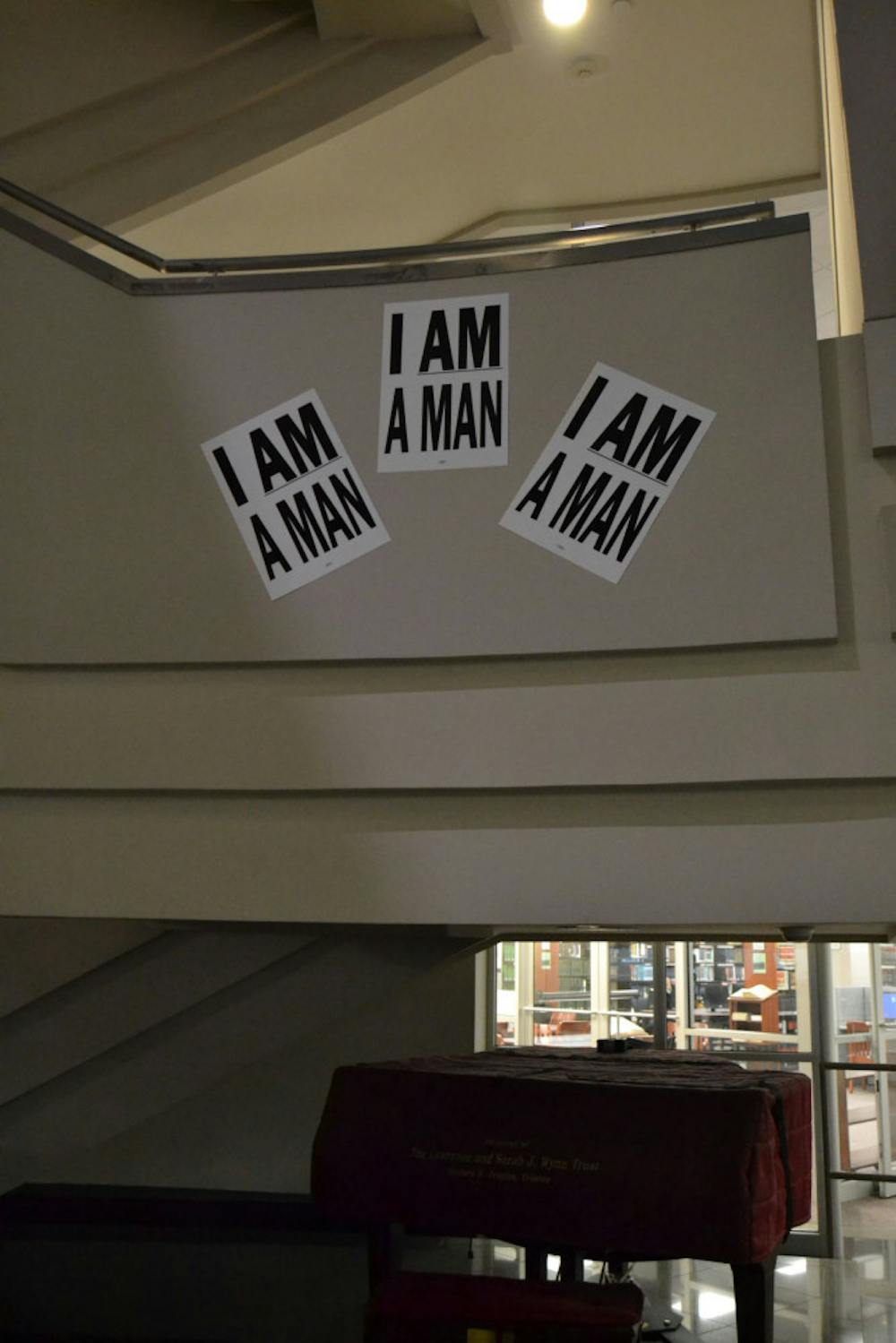
To honor King and the sanitation workers, the city of Memphis will host an “I Am A Man” reverse march on Feb. 24 in Downtown Memphis. The march will begin at City Hall and travel to the Clayborn Temple, the headquarters for the strike. This is the reverse path of the original 1968 march.
The march will include live entertainment and a guest appearance from CNN political commentator Angela Rye. It will take place from 10 a.m. to 1 p.m., with registration beginning at 9 a.m.
Posters in the McWherter Library proclaim the "I Am A Man" slogan of the Memphis sanitation workers' strike of 1968. The library is hosting many MLK50 activities and events, including a film screening and an essay contest.


