
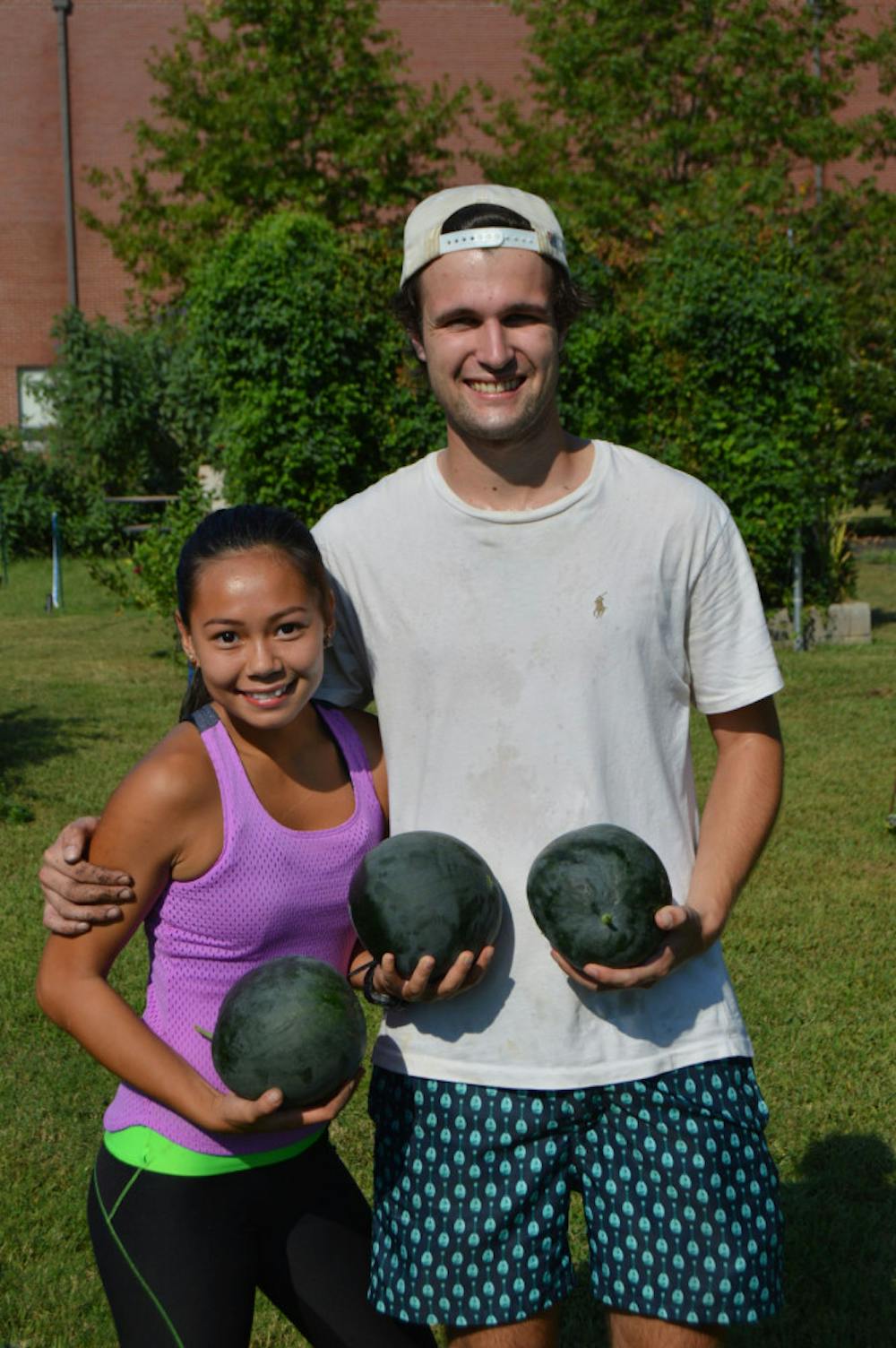
As the semester begins to end, so does the life of the current TIGUrS Urban Garden.
The University of Memphis’s administration has decided to move the garden that Karyl Buddington, U of M director of animal care facilities, started nine years ago. Their reasoning is to make enough room to add 120 parking spaces behind the priority parking lot on Zach Curlin. The current location of the Urban Garden, west of the Elma Roane Field House, will effectively be paved over for the new parking spaces.
On Facebook, the TIGUrS Urban Garden page posted that doing so is a “blatant disregard for the students’ concerns set forth in the University of Memphis Green Fee Policy whereby students pay a $10 Green Fee as a part of their tuition intended to support sustainable projects.â€
Students who work for the garden heard rumors about the plans before it was official. Anna Vo kept working despite these rumors.
“Karyl came and told us what had happened,†the 19-year-old said. “We wanted to petition, but it was final.â€
Vo said they are still trying to spread the word about the university’s plans.
The university has promised to provide green space for another garden, but it will be only one fourth the size of the current garden, according to Vo. Those who work at the garden have been told they will also be able to build gardens elsewhere around campus.
As the university plans to begin construction for the new recreation center at the end of this semester, parking concerns grow. During construction, the parking lot on Southern Avenue will offer students approximately 300 fewer places to park.
David Zettergren, the vice-president for business and finance, is “responsible for arriving at strategies for the loss of parking that will occur once the new recreation center construction begins around the end of the semester.â€
“I have met with Dr. Buddington and several others to discuss the relocation of the garden, and we are working on the beginnings of a plan to relocate before spring planting time,†Zettergren said in an email to The Daily Helmsman. “I am an avid gardener myself, and I know most of us on campus are huge fans. I can assure you we will make sure the garden is successful, no matter where it is located. It is now very much a part of our campus!â€
Still, some students are already nostalgic for the current location of the garden. Jeremiah Davis, 19, works for the sustainability office in the food recovery department. Monday, he spent some time in the garden.
“The school prioritizes parking over green space,†Davis said. “They don’t see the importance of the garden.…Every time I come out here to dispose compost, I see people looking at the greenery. [Administrators] don’t see the importance of the garden.â€
Dylan Thomas, a lifeguard at the current U of M recreation center, is also disappointed as the university moves forward with plans to pave over the space.
“I would take girls on dates there,†the 23-year-old said. “I would bike there many times for fresh okra, peppers and other veggies to go back and cook with. It was a great place to observe progress and learn from their ways of gardening. I’ve been watching the garden die and come back to life for eight years.â€
When Buddington started the garden, she said that she wanted to show students how to grow their own food, provide them with organic vegetables as well as herbs and retain students by creating jobs.
“When you look at a map of campus, there are only three green spaces,†Buddington said. “This is one of them.â€
Many departments, including architecture, biology and anthropology have hosted several events at the garden. Buddington doesn’t believe changing the location of the garden for parking is a good trade.
“We were told his what the students wanted,†she said. “This is only 120 spots, which is not going to solve the problem.â€
Now, just shy of existing for a decade, the current location of the TIGUrS Urban Garden has its days and daisies numbered. “It’s a beautiful space, a beautiful garden,†Buddington said. “Soon it will just be pavement. You can’t get that back.â€
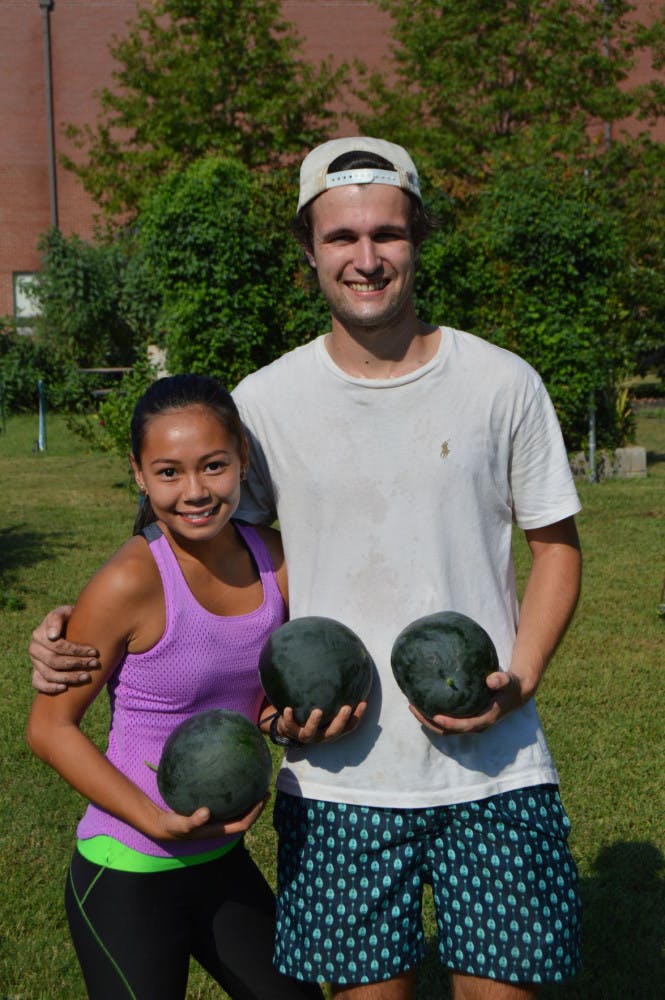
University of Memphis health studies students Anna Vo and Alexander Schyer work with the plants in the Tigers Initiative for Gardening in Urban Settings (TIGUrS) community garden. The garden itself is a product of the “Green Fee,” and celebrated on Tiger Blue Goes Green Day. This day annually celebrates a variety of projects and initiatives that aim to conserve natural resources and introduce the concept of sustainability to students at the U of M.


