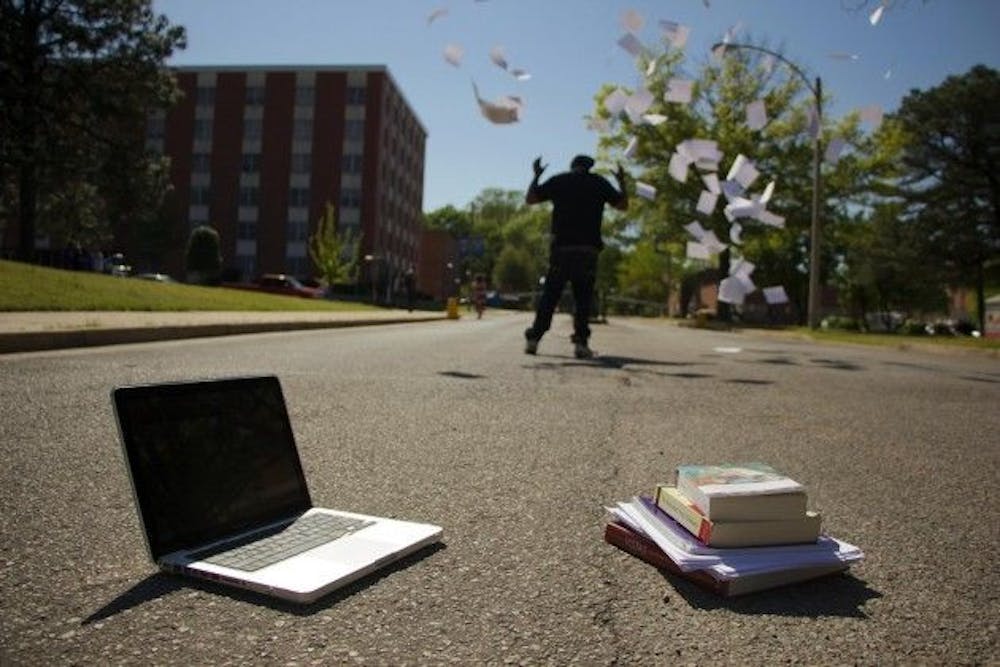
As the end of the semester comes near, desks are empty, and students decide to drop the course at the last second. This time of the semester is known by some professors as the "end of semester slump."
Laura Snyder, an adviser and professor at the University of Memphis, said students stop going to class because "they realize there's not a chance in hell they're going to pass the course, and students get burnt out."
English professor J Christopher O'Brien agrees.
"Students who aren't coming to class typically are in the C to D range and need to be there the most," O'Brien said.
Brooke Benjamin, a sophomore, said that he gets lazy after midterms but that doesn't mean he won't pass.
"I have the right to go to class when I want because I pay for it," Benjamin said.
Snyder feels most students don't realize the consequences of not showing up to class.
"You could fail and get put on probation, and then get suspended if the behavior continues," she said.
This information shocked junior biology major Brandon Wood.
"I didn't realize I could get suspended just for not showing up," he said.
Wood only attends courses that he knows he needs to go to like biology and chemistry.
"If I feel like going to a particular class isn't important, I won't go," Wood said. "Most of the time, I skip to study for other classes that I think are more important."
According to Snyder, students who attend classes regularly make better grades and have a higher chance of graduating.
O'Brien feels the same way.
"The (students) who are (in class) regularly typically have A's and B's and are already outperforming their peers," he said.
Students who don't attend class do more than just miss out on information.
"Most students don't realize not coming to class hurts the professor's feelings especially if they had been doing well in the course," says Snyder.
O'Brien thinks differently.
"I don't feel insulted when students skip my class. I'm probably the 10th or 11th priority on their list," O'Brien said.
Some students don't think about how it affects professors if they don't show up.
"I'm not trying to hurt the professor by not going sometimes life just happens and I don't go," Wood said.
To improve class attendance, professors are encouraged to use what's known as the Hopson Report or Early Intervention.
"Instructors can report students whose attendance is poor and the report is sent to the student's academic adviser, the student and the Center for Academic Retention and Enrichment Services," Snyder said.
She also feels that encouragement from professors could help the student.
"Personally, I email my students when they stop coming to class to see why they've stopped attending," Snyder said.
Wood said that he wished his professors showed more care for the students, because none of his professors have sought out why he hasn't been in class.
"If the professor personally encouraged me to go to class, I might make a better effort to attend," Wood said.
Snyder hopes that more students realize not going to class hurts more than helps.
"You could get suspended, the second time for a year, the third time for three years. Three strikes you're out, so it's best to just go to class," she said