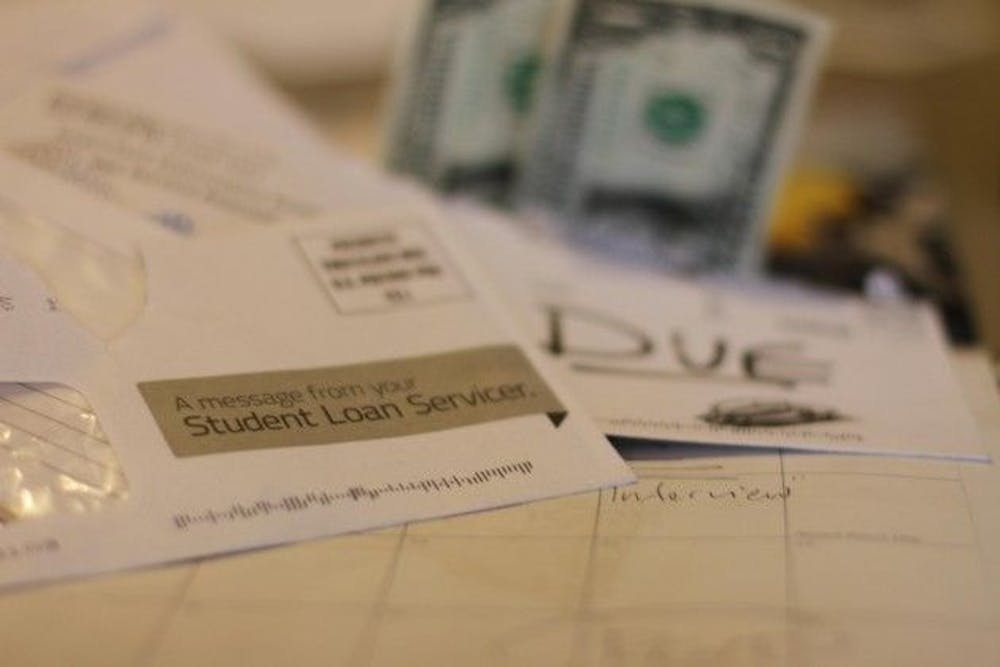
Although most students have been told that they must go to college to get a decent job, their degrees do not guarantee a career - an overwhelming reality for a graduate when receiving the first student loan bill.
Nationally, about 37 million people have outstanding student loan debt totaling at around $1 trillion, according to American Student Assistance. The amount of outstanding student debt has been called a crisis, bringing the attention of the media and lawmakers alike.
While most loans have a grace period of six to nine months, this proves to not be enough in today's job market, as the unemployment rate for recent college graduates hovers around 7.9 percent. The unemployment for college graduates hinders their ability to pay off loans, as 48 percent of 25- to 35-year-olds claim unemployment and underemployment to be the main cause of struggling with their debt, claims the ASA.
According to the Project on Student Debt, 58 percent of University of Memphis graduates in 2012 graduated with some sort of student loan debt, with the average amount at $22,214.
Drew Garth, an engineering graduate, believes school is an investment, and, like all investments, has risk involved.
"Some people get screwed with student loans," Garth said. "Like everything, you get a return on your investment, but with student loans, it might take even longer to break even."
Garth made most of his tuition from scholarships but paid the rest out of pocket with money from his savings.
"In today's economy, it may be smarter to wait until the unemployment rate in a major's field goes down, and work to save money for college until that happens," Garth said.
Garth believes that the majority of scholarship money that a student makes depends on his or her high school performance.
"People don't realize how important high school is," said Garth. "If you put a little effort into the ACT by reading a book or taking a class, you can puff your ACT score and get the Dean's Scholarship."
Andy Britton, a recent philosophy graduate, also paid out of pocket what his scholarships did not cover.
"With a bachelor's degree, it's almost always possible to work to pay for school," Britton said. "But if you must take out loans, make sure you get in the workforce as quickly as possible to pay off the debt before it accrues more interest."
Ashleigh Arnwine, who graduated with a degree in health service administration last December, took out several loans while she was at the U of M.
"The bills were very overwhelming at first, but I found a full-time job," Arnwine said. "Finding a career is the first thing any graduate should do, especially when facing loan payments."
The FAFSA offers seven different ways to pay off student loans. Arnwine took the Income-Based Repayment Plan, a service that bills the borrower a percentage of his or her monthly income.
"Look into the different options and find the one that best fits you," Arnwine said. "Don't be unprepared when the grace period runs out."