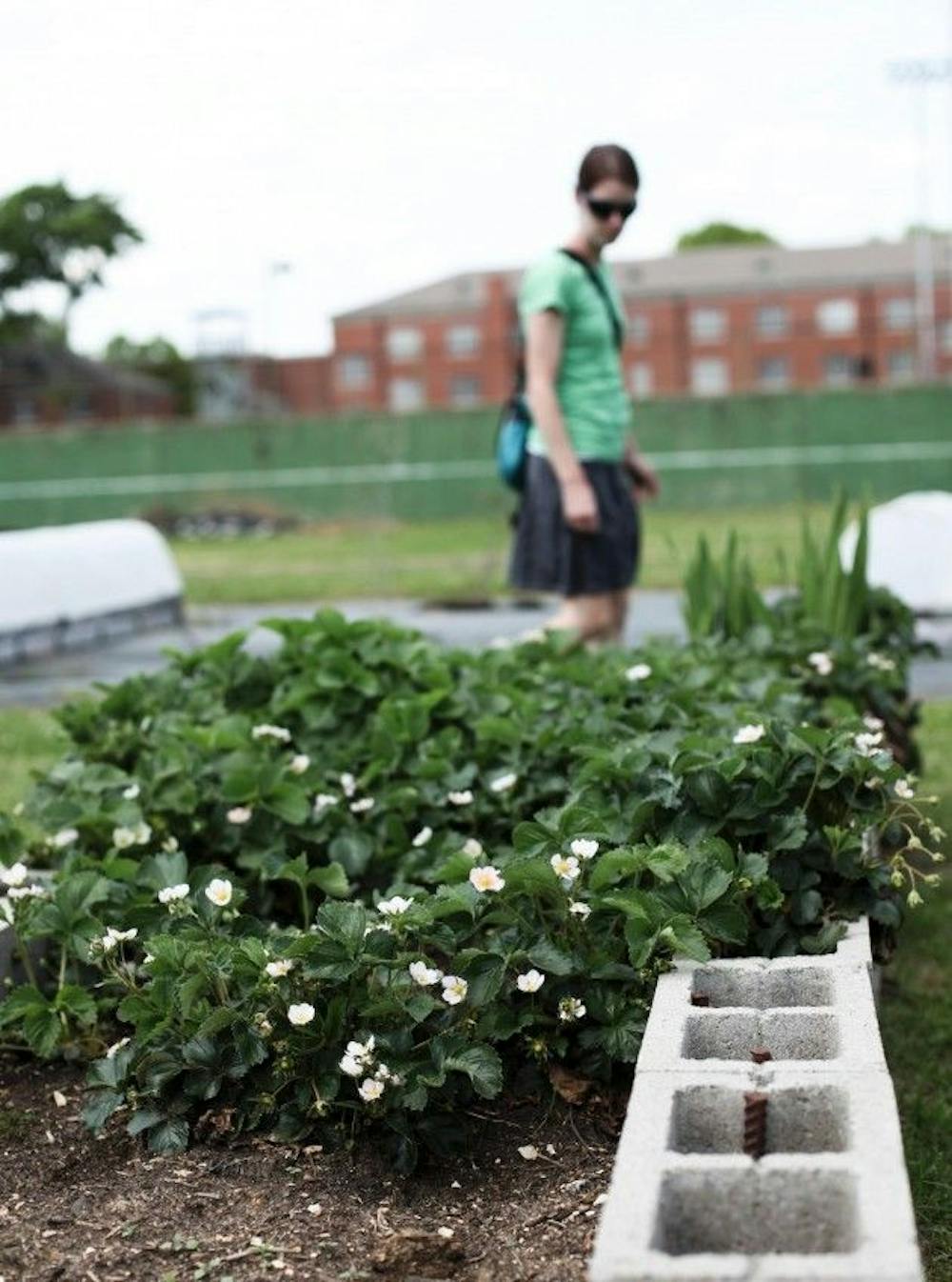
In a few weeks, an oasis on campus will be filled with strawberries, cucumbers, mint, sweet potatoes, peppers and a myriad of other vegetables and herbs. More than 50 raised beds outlined with concrete cinderblocks will house fresh, free food for members of the Memphis and the University of Memphis communities.
For years, the Oasis garden, maintained by the Tiger Initiative for Gardening in Urban Settings, has been a plant haven tucked away behind the Elma Roane Field House.
"It is a great place for students to go out and eat lunch and to graze if they want - a place where you can be outside and be at peace," Karyl Buddington, founder of the garden and director of animal care facilities for the University, said. "Classes often work you up, and you have to run from one emergency to the next, but there are no emergencies in the garden."
The garden is open not only to students, faculty and staff but also to the whole Memphis community.
"It is a community garden; it belongs to the community," Art Johnson, a landscaping employee who has been involved with the garden since July 2010, said. "The primary focus is for students, faculty and staff, but everyone who wants to be involved can be involved."
People are encouraged to utilize the garden, either through picking the fresh, ripe produce or just enjoying its lush, natural atmosphere. Many faculty members are already using it as an outdoor classroom.
Volunteers are always needed to plant and tend to the garden. Johnson asks only two things of those who go to pick produce.
"We ask that they don't uproot anything and that they leave enough for other folks as well. We call that reaping responsibly," Johnson said.
For the past few weeks, some of the plants, including peppers and tomatoes, have been starting their roots atop the Life Sciences Building in a greenhouse filled with tropical plants and colorful orchids.
"They make paper pots and allow them to germinate for a few weeks before planting them," Barbara Taller, associate professor, said.
These seedlings were recently planted and will soon be accompanied by sweet potatoes, marigolds and catnip. The latter two are used in an effort to make the garden both fruitful and organic.
"Combination planting is the primary way we keep the garden organic," Johnson said. "We plant marigold and catnip, plants that confuse or disorient pests, or ones they don't like."
TIGUrS has fostered productive gardens organically for years.
"It is important for the garden to remain organic for the simple fact that we don't want to introduce any toxins that would go into the soil, into the plant and potentially into the food," Johnson said. "Also, organic foods are definitely tastier."
On April 13, TIGUrS planted a new community garden near the corner of Highland and Walker Streets next to RP Tracks as a part of the MEMFix event.
"We planted herbs and vegetables they can use in their dishes as well as a fig tree and rosemary bush," Buddington said.
While that garden will most likely be used primarily by the restaurant, it is also open to the public.
"That's how our gardens have always been; they are free for everybody," Buddington said.
Buddington has high hopes for the garden and the University.
"I would like to see it continue to grow. I think our University has an excellent chance to be a leader in urban garden development," Buddington said.