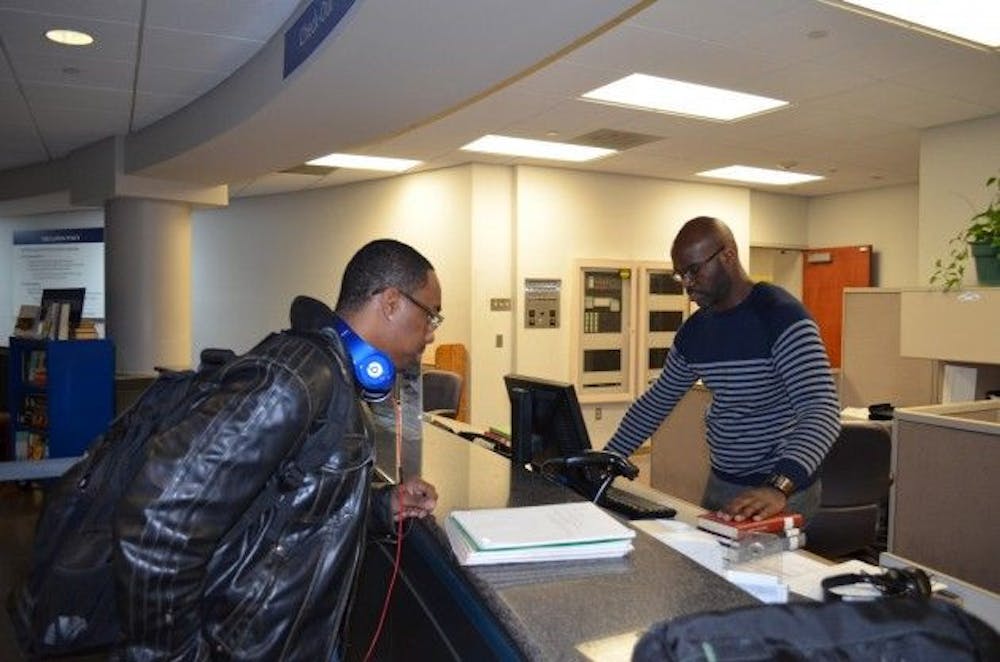
One of the University's top resources is currently lacking in funding for some of its most vital resources. Members of the Faculty Senate Library Funding Committee have begun meeting weekly to discuss ideas for acquiring more money for materials and resources for the Ned R. McWherter Library.
The budget for the library is allocated by the University administration, partly for operations and partly for materials. In the past, the library budget has seen a roughly 10 percent increase yearly, but that number has been stagnant in recent years, according to Dr. Sylverna Ford, dean of University Libraries.
"The budget does not keep pace with what we experience as we try to keep pace with what the campus needs," Ford says. "We really can't maintain the same level of resources with our budgeting without receiving some of the increases."
In April, the faculty senate passed a resolution asking the University provost to review library funding because of a belief that the library was underfunded. The committee was formed to determine whether or not the library is in fact underfunded, and if so, what options are available to increase funding.
"Some information from the program evaluation indicated that the library resources were minimal for certain disciplines, while others have no issues," said David Greganti, chairman of the funding committee and business officer in the Department of Engineering.
The committee is currently meeting to discuss ideas for increasing funding for library material acquisitions. Ford says the library in fact needs increased funding for both materials and operations.
"That is the part [materials] that is most visible to faculty, because it affects our ability to acquire resources for their teaching and research," Ford said. "We need help on both sides."
Ford named an increase in electronic resources and the subscriptions that come with them as an example of an area where the library could use additional funding.
"One problem, so many resources are becoming available in electronic form, but we're also having to maintain print collections," Ford said.
Electronic library resources often come with an annual subscription or access fee. The library is committed to maintaining these subscriptions, but is lacking the funding needed to keep up with the yearly costs, according to Ford.
While there has been no specific mention of what exact resources the Library Funding Committee has been citing in their reports, Greganti reports that the committee has been researching funding practices at similar institutions in order to find the best funding practices that may be applicable to the University.
At this time, the committee is considering multiple options, including implementing a stuzfunds that currently go to the athletic department and hiring a fundraiser for the library, among other options.
"We're just making a recommendation," Greganti said. "Where it goes from there is out of our hands."
Suggestions from the committee will be presented in a report to Interim Provost Tom Nenon by the end of March.
"I think [the library] is a crucial partner in the process of education," Ford said. "We serve students and faculty, and want to be able to support their educational endeavors. We can only do that if we have funding to provide and support those information resources."