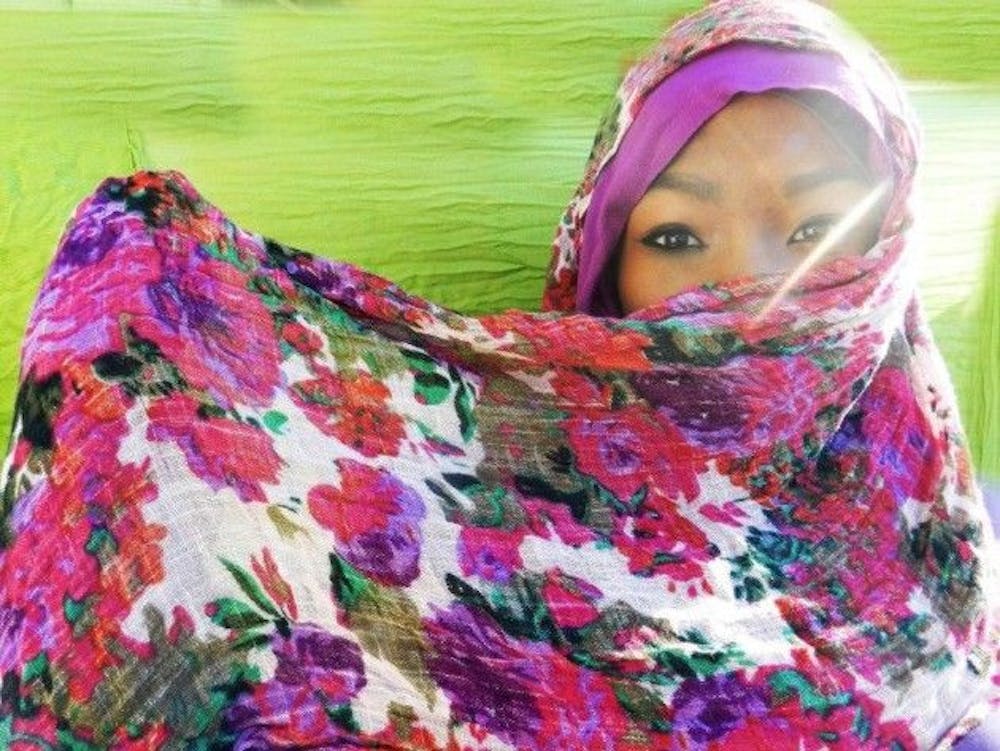
The outer garment used as a modesty cloth in the Islamic religion is most commonly referred to as a hijab. It comes with a slew of misconceptions that women at the University of Memphis hope to debunk.
In the Islamic Quran, the hijab is referenced in the following text:
"O Prophet, tell your wives and your daughters and the women of the believers to bring down over themselves [part] of their outer garments. That is more suitable that they will be known and not be abused. And ever is Allah Forgiving and Merciful."
The ancient covering has been the topic of international conversation in recent years in non-Muslim countries, such as the United States and France, where the scarf has been a source of controversy. Discussions involving the hijab usually center on safety concerns related to identification, women's rights and adhering to societal norms in non-Muslim countries where members of the Muslim community have growing populations.
On Thursday the University community is invited to be a part of "Debunking the Veiled Myth: Fashion and faith through the eyes of a modern Muslim woman."
The presentation and open discussion will be held in the University Center Ballroom at 6 p.m. Panelists will share their perspectives regarding their choice to observe a practice of the ancient religion within the confines of present-day life. General questions regarding various aspects of Islamic culture will also be encouraged and discussed.
"It will be centered on cultural viewpoints from around the world - not just one area," said Yasmeen Odeh, president of the U of M's Cordoba Society of Archivists. "It's 'debunk', because we're going into different stereotypes people have about us. We're going to break them down."
The Cordoba Society of Archivists, along with the United Nations Student Alliance and the Student Event Allocation Committee, has invited speaker Lucrecia Guerrero to campus to share her insight on the position of women within Islam. Guerrero, along with other Muslim women from the University community, will discuss some of the prejudices, stereotypes and issues related to discrimination against the veiling practice in particular. She will also share her personal story as a convert.
Guerrero is a Florida resident who is a native of the predominantly-Catholic country of El Salvador. She converted to Islam in 2006. Since then, she has offered her perspective to audiences on various topics related to the hijab, including the International Federation of Association Football's 2012 lift on its ban of the hijab being worn by Muslim women during soccer competitions. Guerrero has also spoken on the relationship between husband and wife in Islam and recent media coverage related to the faith.
The panel will engage with the audience as they share their individual stories as women who practice Islam. The women represent Muslim women from around the world, including a convert who began wearing the hijab in high school.
"We want the audience to learn," Odeh said. "We can all learn. We want to give people a comfortable environment. People have come to me and said, 'I want to ask this question, but don't want them to be offended.' I appreciate you asking rather than making an assumption."
"Debunking the Veiled Myth" will also feature a photo collage presentation of Muslim fashion and head-covering styles, ancient and modern, from various parts of the world. Odeh collected submissions from women from various backgrounds to showcase the diversity of Islam. Cultural food and artifacts will be on hand to help welcome attendees.
The Cordoba Society of Archivists exists to raise public awareness of the contributions of Islamic civilization to the world. The group formed last year after students realized there was not a similar organization on campus.
Last semester, the group hosted a screening of a BBC documentary on the artifacts found in Timbuktu, the former ancient center of Islamic learning located in the present-day West African nation of Mali.
Their ultimate goal is to create an online or on-campus archive of Islamic artifacts for the University community.
"We show that there are still many Muslims around the world - not just Arab," Odeh said. "We want to help change the mindset in general so that there will be more in-depth thinking."