It can read your mind.
Really.
The University of Memphis' Institute for Intelligent Systems has created a tutoring system that adapts to student's needs by analyzing their cognitive and emotional reactions - including boredom and frustration.
AutoTutor uses conversations between an animated talking figure and the student to teach difficult subjects, like physics, for high school and college students and biology for middle school students.
"This is one of maybe three in the world that helps students learn through conversation. It presents difficult problems that take about a few sentences to answer, then holds a conversation between the student and tutor," said Art Graesser, co-director of The IIS.
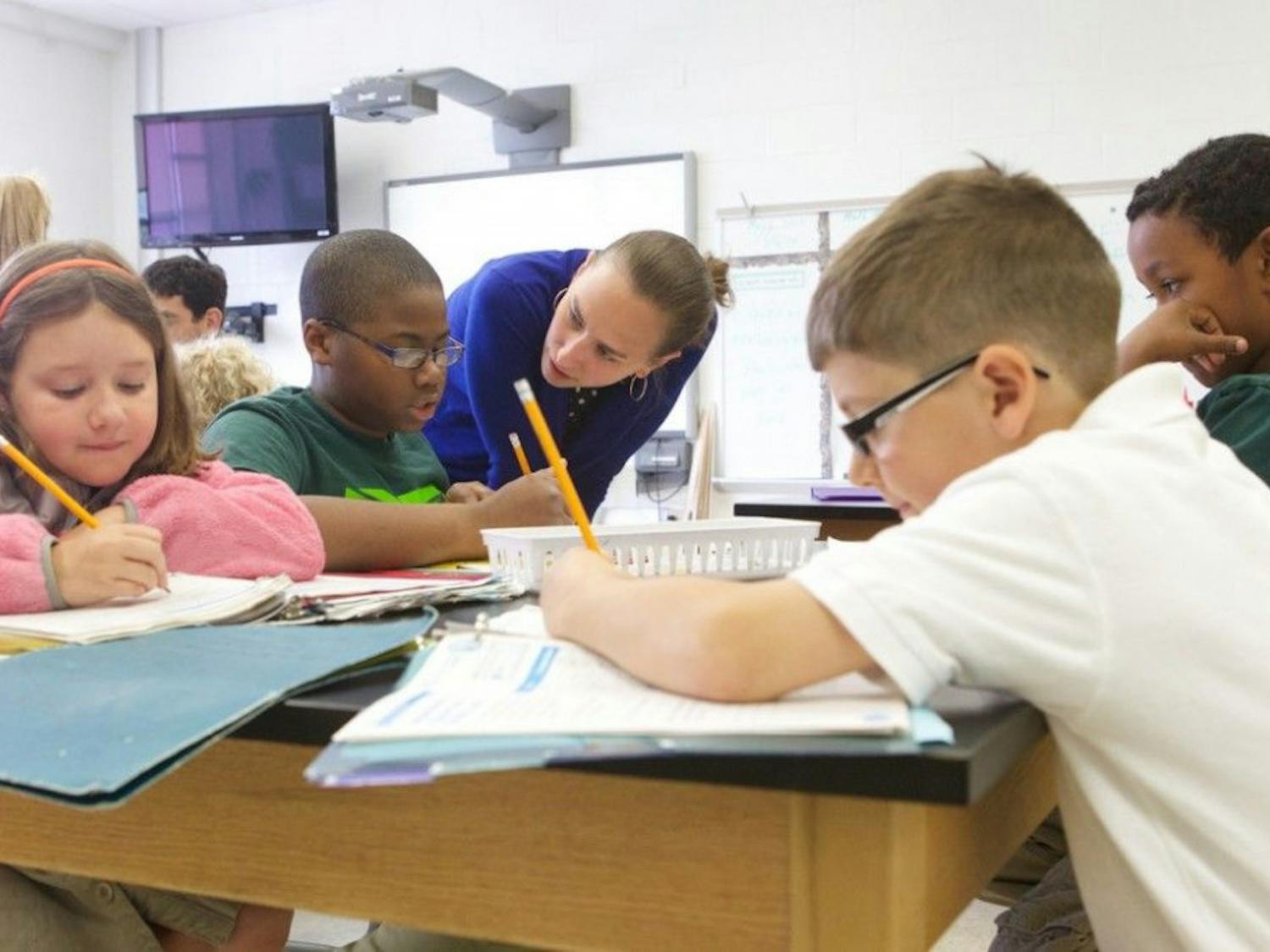
Studies have shown a human tutor is the most effective form of cognitive learning. Students get the one-on-one attention they need when working with a tutor individually. AutoTutor allows each student to have a personal tutor at the convenience of their laptop.
"Affective studies show it's as effective as a human, and the beauty of software is you can make copies," said Andrew Olney, associate director of cognitive psychology at IIS.
Olney has released a downloadable version called Gnu Tutor that students can download free of charge, he said.
Xiangen Hu, cognitive psychology professor, built the AutoTutor Lite system where a creator of the program can build a tutoring program on any topic.
IIS received a $1.1 million grant from the National Science Foundation in August 2011 for the project, "Beyond Boredom: Modeling and Promoting Engagement During Complex Learning." Graesser said the ISS is operating on about a dozen grants for their research on intelligent computer tutoring systems, totaling roughly $15 million.
The U of M is one of four university leaders in the area of computer tutoring systems that use conversational agents to engage students. The University of Southern California, Massachusetts Institute of Technology, Arizona State University and Carolina State University are also studying the technology.
What is missing is to take the technology out of the lab and into schools is a company to license the product, Olney said.
"What we have works, but you can't just drop it in a principal's hands for people to use. They have to author lessons for the material they want to teach-there are technical challenges," Olney said.
Pearson Education has taken an interest in intelligent tutoring systems. A version of AutoTutor, called Operation Ala, is in the works of being commercialized by Pearson and is expected to be released later this year. Operation Ala is a game environment where students learn research methods through playing games. It is geared toward college and high school students.
The U of M has profited from AutoTutor in many ways, probably close to $20 million in research grants, said Olney. The research has also brought in graduate students, built labs, created context for training students and generated prestige for The University, he said.