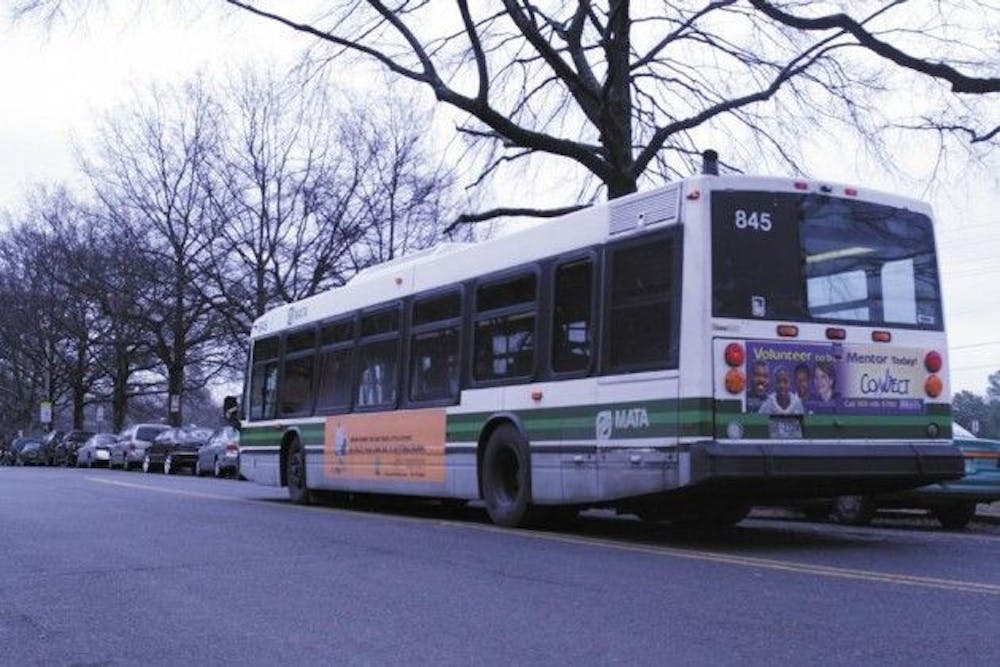
Hot dust sprayed Scott Mar'Quella in the face as a Memphis Area Transit Authority bus passed her 45 minutes after her first bus broke down.
When the senior criminology major arrived on campus, she was an hour and 40 minutes late to her financial aid meeting.
Mar'Quella remembered this as her least favorite MATA experience.
Now she is upset over increased fares and cut services to The University of Memphis that became effective in December.
Her student perspective is one component of the Transportation Task Force that addressed the issues of inequality they believe are inherent in the Memphis public transportation system at a town hall meeting Jan. 28.
The group is now forming the Memphis Bus Riders Union to increase public input and accountability for public transportation services in Memphis.
"Public transportation is a civil rights
issue," said Laura Sullivan, a community organizer with the TTF, at the meeting.
In a city where an estimated one-third of the population lacks access to private transportation, poor services and high fares reflect the city's inability to meet the needs of its people, Sullivan said.
Many of those reliant on public transportation are African American and working class, she said.
Alison Burton, Director of Marketing and Customer Relations at MATA, views the issues from a different perspective.
"I just don't understand it," Burton said. "It is really disheartening to me that people want to make it about race and class when there is so much history about public transportation trying to help."
She recalled growing up as a member of the black community during the era of integration when some of the first jobs in Memphis for black men were as bus operators, a position often held with pride.
"Many of these people were the first to retire with benefits," she said.
When the black bus drivers began to drive the buses, the white ridership decreased, Burton said. She also said many people refused to ride a bus if a black man was driving.
As people moved to the suburbs, so did the jobs, she said.
This east to west route structure is what the TTF said reflects the era of Jim Crow when domestic servants took buses to the wealthy neighborhoods out east.
"The system hasn't been updated to reflect the needs of the people that rely on it," Sullivan said in reference to desired improvements on routes north and south.
MATA said at the meeting it agrees that a structural change is necessary to increase customer satisfaction.
MATA had an ongoing campaign to get more customer input on the restructuring of the transit system before it implemented the fare increase and route changes in December, Burton said.
She also said they ran ads in The U of M directory at least twice to spread awareness about route options to campus.
Student ridership is not at the level MATA would like to see, she said. "We don't service as many students as we used to."
A cutback in services implemented in December 2011 eliminated Route 2 from downtown to The U of M and limited night service to 5:30 p.m. on the 5-Central, an issue which Mar'Quella finds fault with.
"Now I have to walk to the corner of Patterson and Poplar at night," she said. "It's dangerous. There's no light there, no shelter when it's raining."
The closest sheltered bus stop is Poplar at Highland where a bus runs downtown until 10:45 p.m. or eastbound until 11:45 p.m.
The route services to the U of M were cut because the ridership sensors in the buses reflected poor rider rates to the U of M area, Burton said.
Mar'Quella will join the first meeting of the Memphis Bus Rider Union this Saturday from 1 p.m. to 3 p.m. at the AFSCME Union Hall, she said.