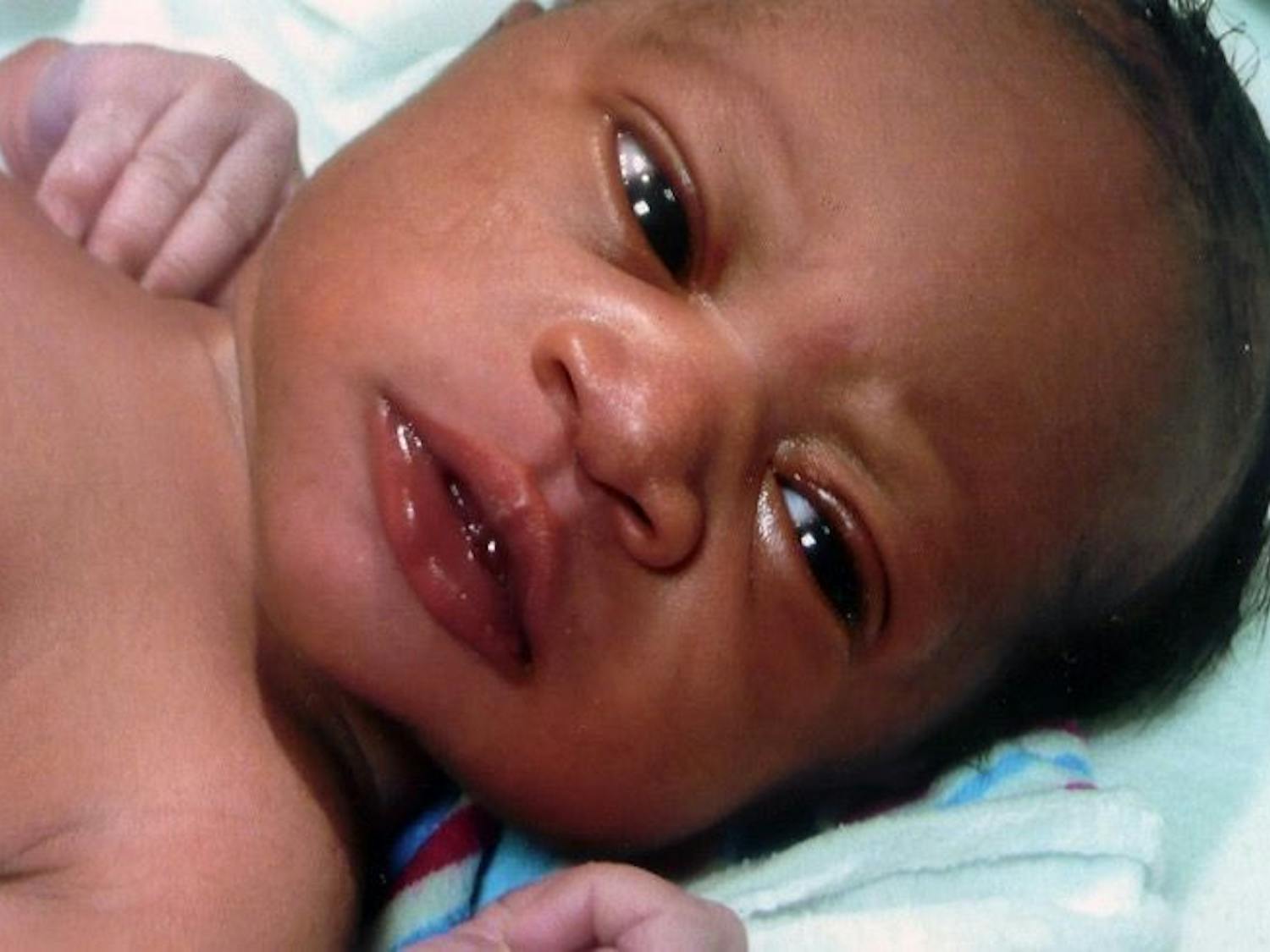
At the funeral were 17-year-old Marcus Matthews, a baby girl and a young mother. The mother was dead, the baby was four months old, and Matthews, the child's alleged father, was confused.
Matthews, now 30, didn't believe he fathered the child and had a paternity test performed a month before the mother's death.
A month after the funeral, a paternity test confirmed Matthews' doubts about the child. She wasn't his.
"I don't want anyone to go through what we went through," said Matthews, coordinator for The U of M's high school publication, Teen Appeal. "I want to tell people my story so they don't have to retell it firsthand."
Today at 6 p.m. in the University Center Memphis Room, Matthews will host an open discussion entitled "Sex, Dating and DNA: Discussion with Marcus L. Matthews" about his book "I Am Not the Father: Narratives of Men Falsely Accused of Paternity."
Free and open to the public, the event will also mark the beginning of filming for Matthews' documentary about false paternity claims and paternity fraud.
"Since my book was released, I have heard some amazing stories about men who have been victims of paternity fraud," he said. "We were looking at a movie, hiring actors and turning it into a motion picture, but I said we needed to go deeper into paternity fraud first. A movie is great entertainment, but it's not necessarily as informative as a documentary, and a lot of people don't know what paternity fraud is."
Steve Conn, director of local business Medical Testing Resources, said paternity fraud is when a woman knowingly accepts resources, such as child support, from a man while knowing that he is not the child's father.
Conn is also known as DNA Steve, a radio personality who conducts paternity tests and reveals the results on local Hip-Hop and R&B station WHRK. He has done more than 600 DNA Steve shows in the last six years and called Memphis "fertile grounds" for those in need of DNA and paternity testing.
He said about 2,500 people a year come to Medical Testing Resources for paternity testing. Medical Testing Resources performs 90 percent of private paternity tests in Shelby County.
The number of men whose paternity tests reveal they are not the father varies by month, he said.
"In February, about 48 percent of the (paternity) cases turned out to exclude the man who was tested," he said. "Our highest month was October, when it was 71 percent."
Conn said there are two types of paternity tests: a legal test and a personal knowledge test.
A legal test is $460 and can be used in court, while a personal knowledge test is $380 and cannot be used for legal purposes because identity requirements are not as strict, he said.
Conn said he has recently seen an increase in the number of paternity tests run on aborted fetuses.
"It doesn't happen often, but it is occurring more and more," he said.
He said testing an aborted fetus is tricky, but people want to know. Equally difficult, he said, is paternity testing right after childbirth.
Tennessee state representative G.A. Hardaway is currently working on legislation to make paternity testing mandatory immediately after a child is born.
House Bill 25 by Hardaway, first drafted in 2007, says, "Regardless of the relationship between a child's parents, a genetic test shall be administered as provided in § 24-7-112 to confirm the paternity of the child before a father shall be listed on the birth certificate."
"A child has the inherent right to know, ‘Who is my dad?'" Hardaway said. "That should be a basic right, and we have the technology to make it happen."
Hardaway said if the bill passes, the Tennessee Department of Human Services would pay for the $55 test if the parents were below the poverty line or no more than 25 percent above it.
Everyone else would have to pay for the test.
Matthews said as someone who has experienced the effects of false paternity, he could appreciate Hardaway's legislation. He said if a DNA test had been performed the day the little girl he was accused of fathering was born, the results would have become clear before the mother died.
"Her mother would have been alive to address that I was not the father of the child, but instead, we take the test three months after child is born. She dies when the child is four months old, and we get results when child is five months old," he said. "It's not fun and games anymore. It's not a trivial thing. This girl is dead, and there's a baby who will never get to interact with her mother on this side of reality, and we don't know who the father is. We would have been able to move forward."
Matthews said he hopes his documentary will be done by July of this year.