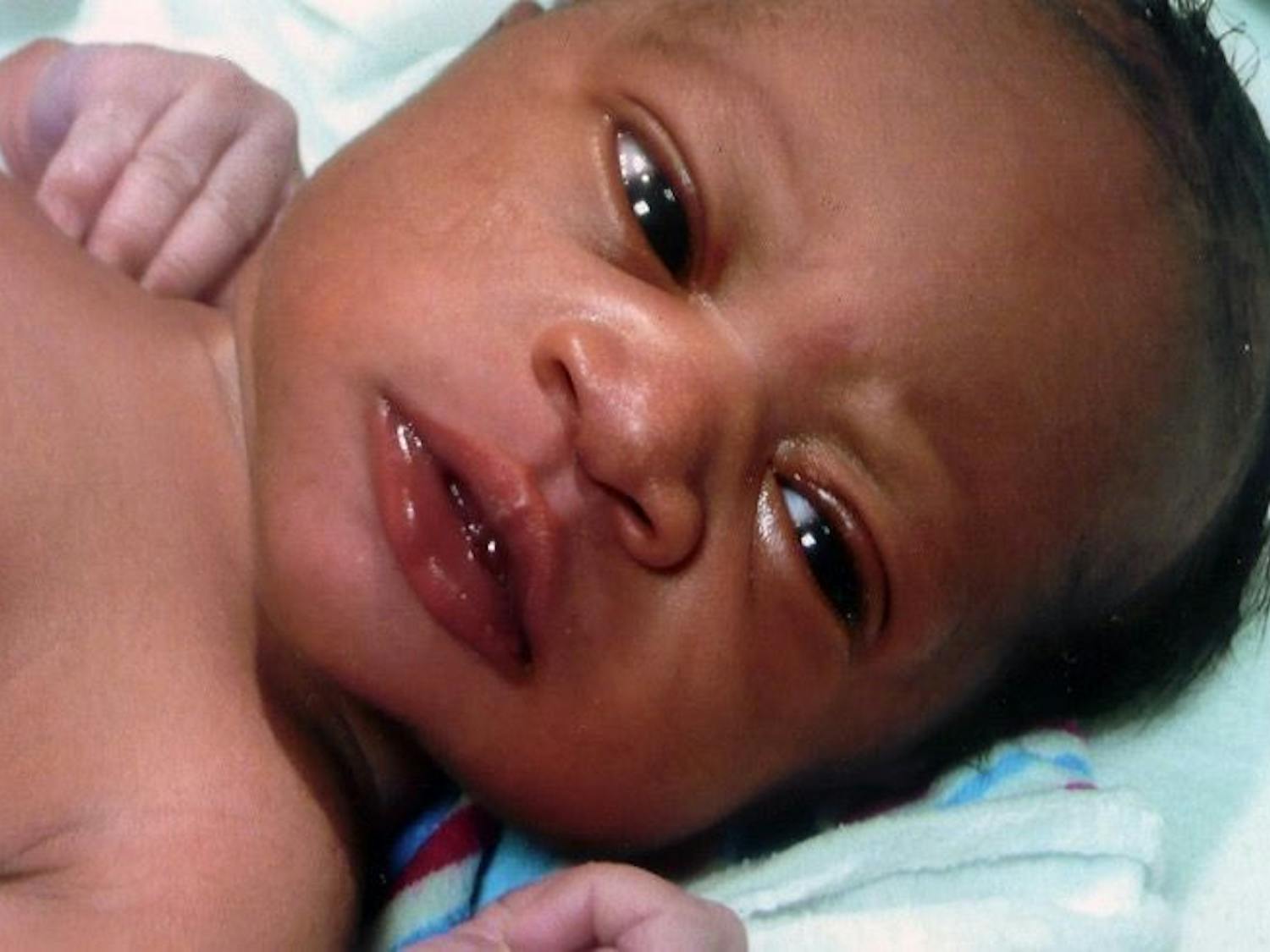
Jennifer is a senior journalism major. Her Twitter handle is @jennifer_rorie.
This is my response to the opinion piece published in Feb. 4's edition of The Daily Helmsman titled, "The fat person you photographed for fun."
The entire opinion piece is based off the assumption that a photo was taken of the author.
Because of the physical appearance of the author, it is assumed that a photo was being taken in a defiling manner. However, the person taking the photo might've been admiring a blouse or bag, complimenting a hairstyle to a friend, taking a selfie for Snapchat or taking a general photo of the ever-crowded lobby of Patterson.
"But I do advocate for kindness," she said. However, she does not suggest that the person taking the assumed photo could've had good, positive, harmless intentions. Instead, she rails the innocent-until-proven-guilty photographer for making fun of her for being what she, herself, states she is - fat.
She took an assumption and turned it into a self-bash, claiming to not really care. When you don't care about something, it's not exactly common to mass-publish a piece about not caring.
I propose we focus our attention on another pressing issue.
As a person who has constantly struggled quietly with being underweight, I have a challenge for anyone complaining about weight hate - shut your mouth.
As you probably could've guessed, there are a lot less sources of information for those who are underweight and struggle with this side of the weight-control spectrum. However, the statistics are there, and they are real.
Fewer than 2 percent of Americans are underweight, according to the National Center for Health Statistics.
I'm not ignoring the issue presented in the published opinion piece. Yes, one out of three Americans are obese - roughly 35.7 percent, according to the Centers for Disease Control and Prevention. The percentage of citizens in Tennessee who are overweight or obese has risen from 20 percent in 1999 to a chart-topping 30 to 35 percent in 2012.
Is obesity an issue? Yes. However, self-loathing is not. Being "too skinny" is just as detrimental as being "too fat." It's just not as common.
In middle school, at 4 feet 9 inches and 67 pounds, soaking wet, I became the center of a lot of undesired attention. My doctors told me that if I worked my muscles and planned a high-protein diet, I would gain weight.
I played basketball and ran track, starting the season of 2003 at 67 pounds and ending at a whopping 66. Clearly that didn't work.
"That girl is all head and no body," was a comment said about me the next year. Considering there were no smart phones and the person was standing less than five feet from me and pointing at me, I can safely assume I was the subject of conversation.
Little did this group know that I had been attending biweekly appointments with a neurologist an hour and a half away due to the fact that my head was too large (insert big head jokes here) for my small frame, pinching a nerve in my spine, causing intense, immobilizing migraines and occasional seizures that affected my every day life.
During the summer before my freshman year of high school, in attempts to rid me of my issue with migraines, I had a small surgery, relieving the tension on my nerves. After this surgery, I gained 30 pounds in three days, placing me at 67 pounds at check-in and at 97 post-surgery.
After school started, this weight, much to my demise, started to come off and my weight dropped to 70 pounds. I became "that freshman girl that does drugs" and "that girl that's on cocaine." I hadn't touched a drug and didn't even know what cocaine was at this point in my life, yet many peers and several teachers assumed I had some kind of weigh-loss inducing drug addiction.
I could hear the whispers. I saw the pointing. I KNEW I was the subject of a conversation I didn't want to be included in. I knew I had a problem - not the drug problem that was assumed - but I had no way of dealing with it because weight loss or being underweight is an issue categorized with starvation, eating disorders and drug use.
Throughout high school, I managed to gain a little more weight, ending my tenure at 5 feet 2 inches and 87 pounds, the most I had ever had as a standstill weight. Oddly enough, I looked forward to my adventure into college and the freshman 15.
Nope. Back down to 82.
Let's fast-forward.
I'm a mother. When I first was told I was pregnant, I weighed 85 pounds, which merited weekly doctor's appointments instead of monthly. At each of these appointments, I was required to get an ultrasound because my doctors were constantly looking for complications due to my small frame, nonexistent baby bump and inability to gain weight.
Luckily, no complications were found with my son who was born happy, healthy and above average for his height and weight.
The same, however, could not be said for me. My body could not withstand the pressure, stress and weight of pregnancy. My bones and muscles shifted to better support my growing child. Without the focus being on solely me, I never noticed these immense changes until two years later.
Now, my muscles overlap my bones in places they aren't supposed to and my shoulder pops out of socket if I move it a certain way just because there isn't enough room. I attend physical therapy to attempt to move my muscles and bones back to their proper place.
I completely understand a person's need to bring up an issue of actual merit to be published. I don't agree with selfish attempts to gain more attention. I understand the piece was written as an opinion, which I respect. However, without proper clarification, the opinion is null and void.
There is a real issue to be brought to light. There are real struggles, real pressing issues, present in our every day lives. Whether these struggles are spoken aloud or kept silent, they do exist.
Weight struggles are an issue, but it's on both sides of the spectrum, not just for "fatties."