Organizations in the area surrounding the University of Memphis have struggled to preserve the district's urban identity for the past few months. After a Memphis City Council meeting Oct. 15, they may celebrate a victory or be forced to swallow a bitter compromise.
Several years ago, the neighborhoods and businesses in the district, in collaboration with the University, envisioned the Highland Strip as a vibrant urban street - safe, pedestrian friendly and fun to walk.
David Cox, the University liaison to area neighborhoods and officer of the University Neighborhoods Development Corporation, said the plan is to bring shops closer to the street. The University District Overlay, as it was called, became the official set of standards that shall guide all new construction.
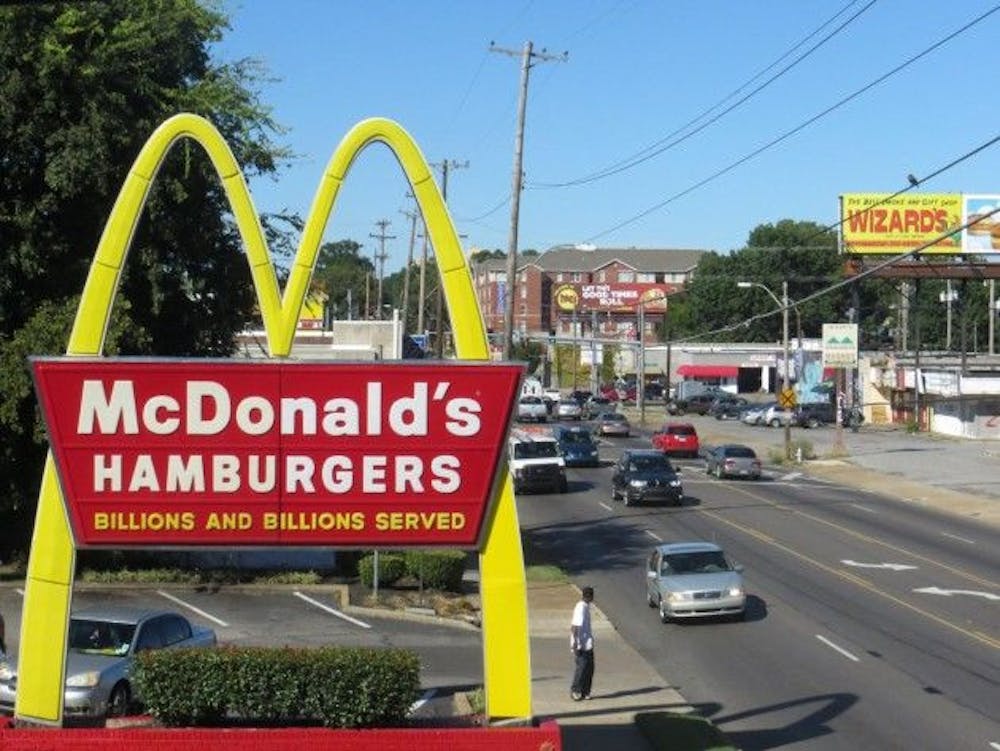
In May, McDonald's applied to build a restaurant on the southeast corner of Southern Avenue and Highland Street, where the Whatever store and Z Market are currently located. The fast-food company intends to vacate its building across the street at 657 S. Highland St., if permitted to build the new restaurant.
Upon the news, some neighbors welcomed the new development, but the excitement didn't last long for many.
Cox, the University District Associations, and many business owners and residents soon wrote letters to the Land Use Control Board, objecting McDonald's proposed plan for its inconsistency with the University District Overlay.
"We spent a lot of time and money on meeting with the University District leaders and changing site plans to come up with something they like, but nothing we do seems to make them happy," said Cindy Reeves, president of SR Consulting, the company in charge of the design and architecture of the project.
The Land Use Control Board held a public hearing on Aug. 8, resulting in the office's approval of McDonald's site plan.
Josh Whitehead, secretary of the board and director of the city's Office of Planning and Development, said the office aims to balance the interests of applicants, property owners and other stakeholders in the neighborhood, while considering the overall benefits of the development to the area.
The office initially tried to negotiate eliminating the drive-thru, which was planned to wrap around the building, but the developer said such requirement would certainly force him to drop the project. His office also rejected a McDonald's site plan that placed the building perpendicular to Highland, because it was substantially inconsistent with the overlay, Whitehead said.
The office then discussed a drive-thru on the east side of the building, but the developer explained that it would not provide enough queue for all customers.
"We didn't want to push too hard, because we would have lost the opportunity to get that site redeveloped and fixed," Whitehead said. "It's like playing chicken - how hard can you push without killing the deal."
But some University District leaders aren't worried about losing McDonald's development as much.
"That property is now on the market. It hasn't been before," Cox said. "It's a very attractive piece of property. Somebody will find a use for it."
Cox said the collaboration of efforts between property owners and the University District leadership has labored new projects that will make the Highland Strip even more attractive to new developments, and will make that property even more valuable.
"We are redoing Walker Avenue from the University to Highland (Street)," he said. "Within a year, you'll see a nice, wide walkway with trees on both sides."
Parking will be behind businesses, instead of being in front, and the street will become more pedestrian- and cyclist-friendly.
"Businesses have already ceded some of their properties to make this happen. This project is currently underway," Cox said, adding that the whole idea is to make it a place where people want to come, walk and interact with one another.
A deviation from the design could threaten the future of the entire district.
"If this exception is allowed, then whoever else wants to come into the neighborhood will want to do the same thing," Cox said.
A final site plan is still in the making, according to Steve Likens, the executive vice president of McDonald's franchisee, Century Management.
"We are still tweaking and adjusting the design," he said. "Ultimately, when we present our final design, it will be up to the city council to accept it or reject it."
The Memphis City Council initially scheduled a hearing and vote on McDonald's site plan on Oct. 1, but Century Management reset the date to Oct. 15. A simple-majority vote, which is 50 percent plus one, can authorize McDonald's to turn its plan into a reality.
The city council's vote is practically final - appealing to the Chancery Court cost tens of thousands of dollars, and the court typically hears less than ten percent of the cases appealed, according to Whitehead.