The Student Press Law Center, based outside of Washington, D.C., initiated a campaign Monday urging students at colleges across the country to flood their universities with requests to view their personal education records.
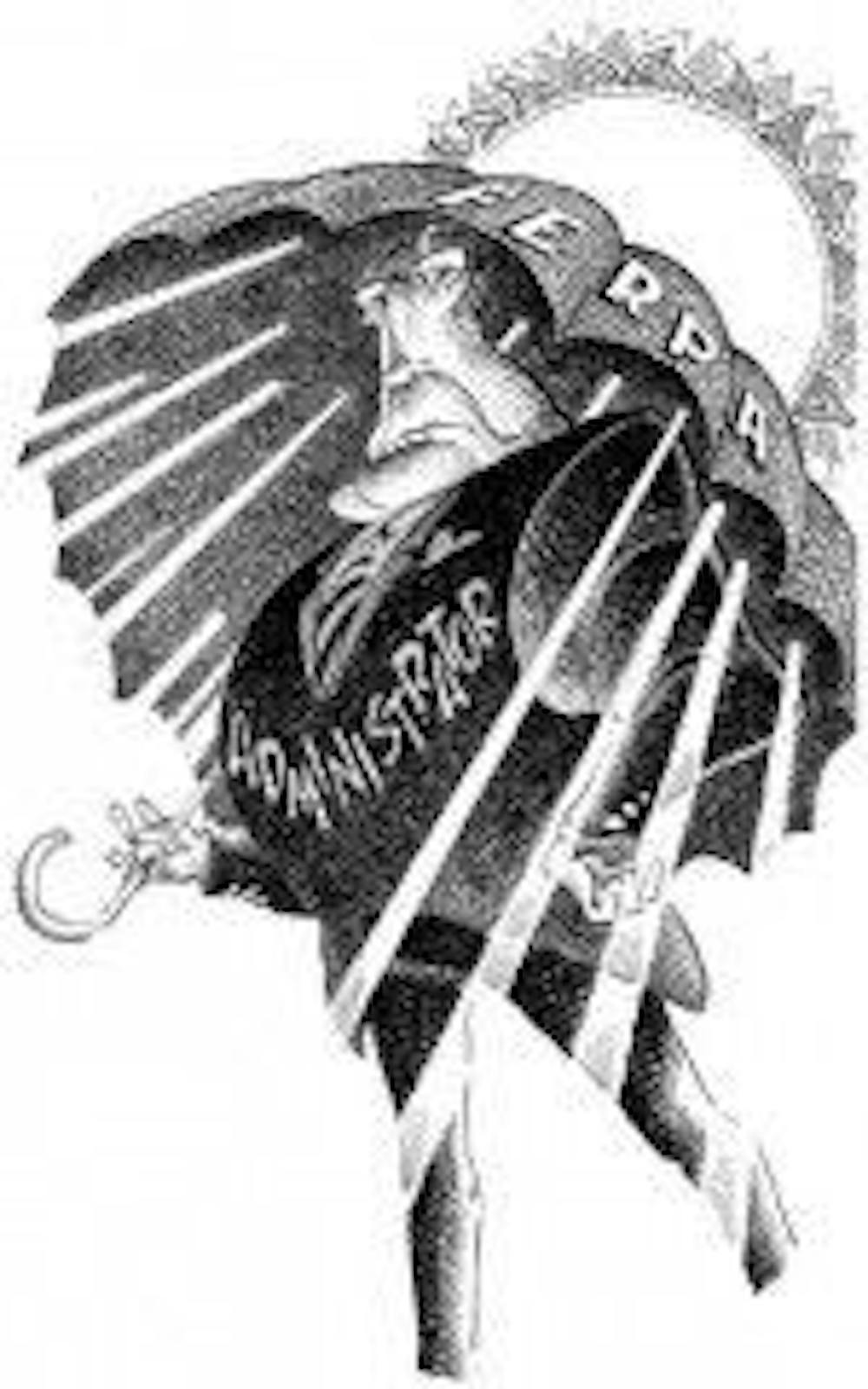
The purpose of the campaign is to expose the practices of universities that use the Family Educational Rights and Privacy Act, a federal law meant to protect academic records from being released to the public, to hide nonacademic records - such as police reports - when they aren't included in the student's academic file.
The campaign is called Let's Break FERPA.
SPLC Executive Director Frank LoMonte said colleges are using FERPA to hide documents associated with disreputable situations involving students, such as athletic scandals and on-campus sexual assaults.
Receiving reports of misuse from all over the country, LoMonte said it was time to get the general public more involved and aware.
"This has been a problem parents and journalists have dealt with, but it is not on the public radar yet," he said. "It is a real problem of accountability."
University of Memphis legal counsel Sheryl Lipman said, "the idea that we hide behind the law is unfair."
"We just enforce the law," she said.
According to the Columbus Dispatch, former U.S. Sen. James L. Buckley, the author of FERPA, said the law has been "bastardized" by colleges and universities.
The Daily Helmsman experienced an open records dispute in March when the student newspaper tried to obtain an incident report of an on-campus rape. Campus police and the Office of Legal Counsel withheld the report as a confidential, student record and said the report was protected under FERPA and not taken for law enforcement purposes.
After LoMonte wrote a letter on The Helmsman's behalf explaining that police reports are open records and do not fall under the protection of FERPA, legal counsel released the report.
"The only thing with that is we are incredibly sensitive to reports of rape," Lipman said. "We bend over backwards to not release what we shouldn't."
But under the Tennessee Open Records Act they had to release the report. All police reports - no matter the type of crime - are public records.
Lipman said the dispute over the rape report taught U of M's legal counsel that a police report is not protected by FERPA, whether it is being pursued as a criminal matter or handled by Judicial Affairs.
LoMonte and the SPLC said the goal of the Let's Break FERPA campaign is to provide enough evidence to prove the law's misuse at other universities in order to convince Congress that the law is too broad and needs to be rewritten.
"I think the law right now is not vague, but I do I think it is broad," Lipman said. "What the law says is any personally identifiable document is covered as a student education record."
Lipman said "flooding" the University with requests won't change anything, but a more effective method is bringing awareness to the broad nature of the law.
"It means every document that exists on this campus that can be tied to any particular student is an educational record," she said.
LoMonte expects universities to say they don't have the time and resources necessary to gather every record with a student's name on it, but according to the law, anything they are going to claim as a private, education record needs to be produced when requested.
"FERPA doesn't say you only release records that are inexpensive or convenient," he said. "If [schools] are going to say video of you riding the bus is an education record, they need to produce that."
He hopes to receive letters from universities saying they "don't classify every piece of paper written with a name a student record."
"No one has put that to the test, so we want [universities] to realize this will come back to bite them," LoMonte said.
The Iowa Supreme Court ruled in July that records related to a campus sexual assault between a University of Iowa student and two Hawkeye football players were private, student records.
"It really illustrates how privacy has been put ahead of the public interest, even in matters of campus safety," LoMonte said. "We respect privacy rights of students, but once you have been accused of a crime, your privacy rights must give way to safety of the public."
LoMonte said he anticipates the Iowa Supreme Court ruling to only apply to that state.
"We think they got it so wrong that other courts will not follow it," he said.
LoMonte said he hopes the SPLC campaign will bring awareness to FERPA as a law that is being misinterpreted and misconstrued in order to withhold public documents.
"Every law is supposed to be interrupted in light of common sense, and common sense has gone out the window when it comes to FERPA," he said. "It results in records being concealed when they're not educational or private."
Students who are interested in filing a FERPA request letter can visit www.splc.org/breakferpa.html.